Poetry
-
Oscar Wilde *X 16 1854 — The Life You Give
Oscar Wilde, born Oscar Fingal O’Flahertie Wills Wilde, October 16, 1854, Dublin, Ireland—died November 30, 1900, Paris, France), Irish wit, poet, and dramatist whose reputation rests on his only novel, The Picture of Dorian Gray (1891), and on his comic masterpieces Lady Windermere’s Fan (1892) and The Importance of Being Earnest (1895). He was a…

-
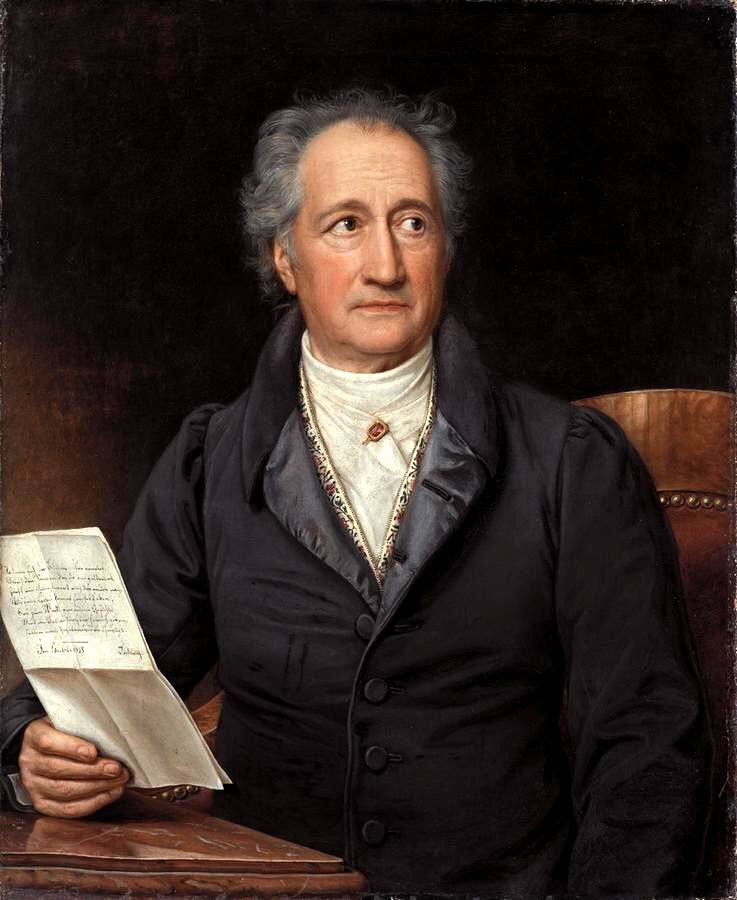
The Life You Give: Johann Wolfgang von Goethe *VIII 28 1749
Johann Wolfgang von Goethe, born August 28, 1749, in Frankfurt am Main, Germany, is the poet, playwright, novelist, scientist, statesman, theatre director, critic, and amateur artist, considered the greatest German literary figure of the modern era. Goethe is the only German literary figure whose range and international standing equal those of Germany’s supreme philosophers (who…
-
The Life You Give: Jorge Luis Borges *VIII 24 1899
Jorge Luis Borges, born Jorge Francisco Isidoro Luis Borges Acevedo, August 24, 1899, in Buenos Aires, Argentina, is the poet, essayist, and short-story writer whose works became classics of 20th-century world literature. Borges was reared in the then-shabby Palermo district of Buenos Aires, the setting of some of his works. His family, which had been…

-
Das Leben, das Du gibst / The Life You Give: Kurt Schwitters *1887
Kurt Schwitters, born June 20, 1887, in Hannover, Germany, is the Dada artist and poet, best known for his collages and relief constructions. Soon after World War I Schwitters was attracted by the emerging Dada school, a nihilistic literary and artistic movement dedicated to the destruction of existing aesthetic values. Denied membership in the Berlin…

-
Contemplate, Smile, Eat, Digest, Express
— repeat —
-
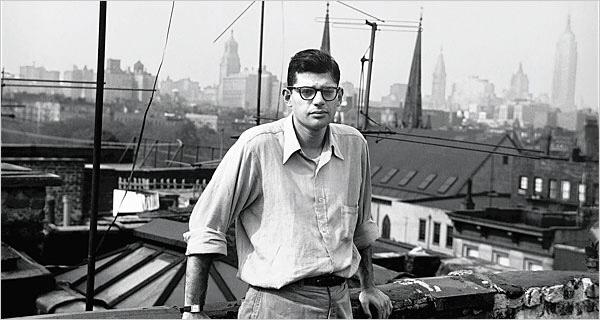
The Life You Give: Allen Ginsberg *1926
Allen Ginsberg, born June 3, 1926, in Newark, New Jersey, U.S.A., is the poet whose epic poem Howl (1956) is considered to be one of the most significant products of the Beat movement. Ginsberg grew up in Paterson, New Jersey, where his father, Louis Ginsberg, himself a poet, taught English. Allen Ginsberg’s mother, whom he…
-
Apelación al solitario / Appeal to the Solitary One — by Rosario Castellanos
Apelación al solitario Es necesario, a veces, encontrar compañía. Amigo, no es posible ni nacer ni morir sin con otro. Es bueno que la amistad Ie quite al trabajo esa cara de castigo y a la alegría ese aire ilícito de robo. ¿Cómo podrías estar solo a la hora completa, en que las cosas y…
-
The Life You Give: Maya Angelou *1928
Maya Angelou, born Marguerite Annie Johnson, on April 4, 1928, in St. Louis, Missouri, U.S.A., is the poet, memoirist, and actress whose several volumes of autobiography explore the themes of economic, racial, and sexual oppression. Although born in St. Louis, Angelou spent much of her childhood in the care of her paternal grandmother in rural…

-
-
When lips to a mind of music speak…
why speak words? Are they speaking due to their own music limits? Do they speak because they are externally asked to convey words, while they have already conveyed music? Are words explanation? Does music need wording? Is music whole through explanation? Why the needy libretto? Who needs who? Is poetry the pursuit of completion?Is the…
-
The Life You Give: Victor Hugo *1802
Victor Hugo, born Victor-Marie Hugo, on February 26 1802, in Besançon, France, is the poet, novelist, and dramatist who was the most important of the French Romantic writers. Though regarded in France as one of that country’s greatest poets, he is better known abroad for such novels as Notre-Dame de Paris (1831) and Les Misérables…

-
The Virtuous Black IX: Maya Angelou
Maya Angelou, born Marguerite Annie Johnson on April 4 1928, in St. Louis, Missouri, U.S.A., is the poet, memoirist, and actress whose several volumes of autobiography explore the themes of economic, racial, and sexual oppression. Although born in St. Louis, Angelou spent much of her childhood in the care of her paternal grandmother in rural…
-
The Life You Give: Patti Smith *1946
Punk rock’s poet laureate Patti Smith ranks among the most ambitious, unconventional, and challenging rock & rollers of all time. When she emerged in the ’70s, Smith’s music was hailed as the most exciting fusion of rock and poetry since Bob Dylan’s heyday. With her androgynous, visual presentation echoing her unabashedly intellectual and uncompromising songwriting,…

-
The Life You Give: Rudyard Kipling *1865
Rudyard Kipling, born Joseph Rudyard Kipling on December 30, 1865, in Bombay [now Mumbai], India, is the short-story writer, poet, and novelist chiefly remembered for his celebration of British imperialism, his tales and poems of British soldiers in India, and his tales for children. He received the Nobel Prize for Literature in 1907. Life Kipling’s…


