Gustav Mahler
-
Recurring Music Series: Symphony #3 in D minor / Mahler
When Gustav Mahler and Jean Sibelius met in Helsinki in 1907, the two composers laid out radically contrasting conceptions of the symphony. Sibelius found beauty and ultimate meaning in the symphony’s “severity of form” and “profound logic.” “No!” Mahler replied. “The symphony must be like the world. It must embrace everything!” No Mahler Symphony gives…

-
Gustav Mahler *VII 7 1860 — The Life You Give
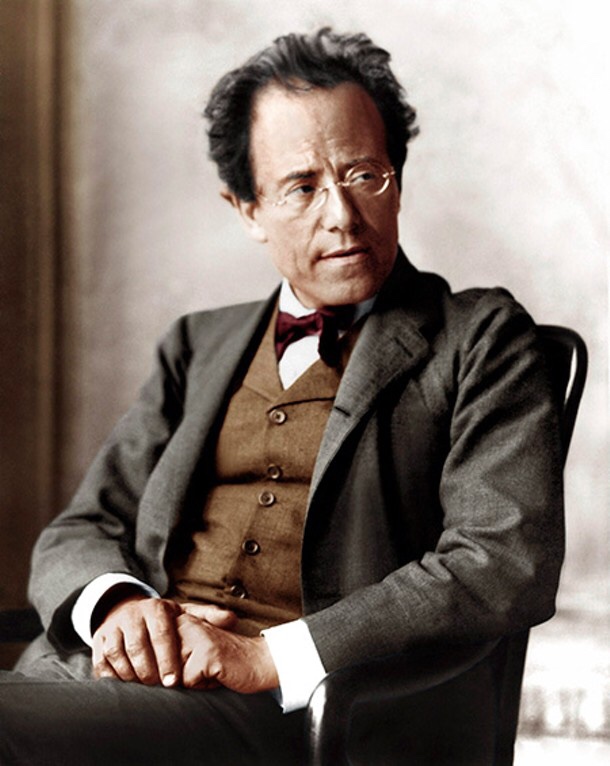
Gustav Mahler, born July 7, 1860, in Kaliště, Bohemia, Austrian Empire, is the composer and conductor, noted for his 10 symphonies and various songs with orchestra, which drew together many different strands of Romanticism. Although his music was largely ignored for 50 years after his death, Mahler was later regarded as an important forerunner of…
-
The Symphony
A symphony is a lengthy form of musical composition for orchestra, normally consisting of several large sections, or movements, at least one of which usually employs sonata form (also called first-movement form). Symphonies in this sense began to be composed during the so-called Classical period in European music history, about 1740–1820. The early part of…
-
Recurring Music Series / Symphony, Mahler #7
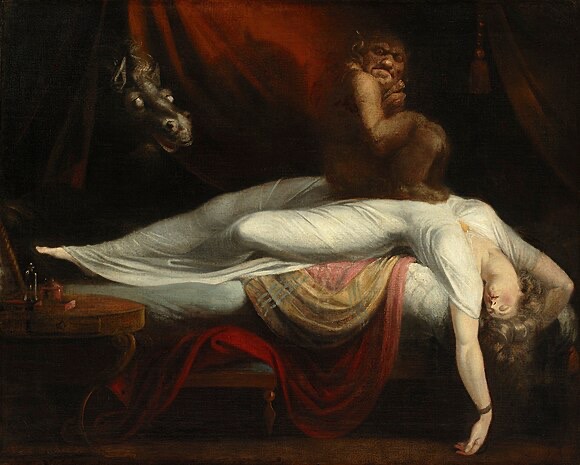
The Recurring Music Series aims to investigate the meaning, source, and relevance of music — piece by piece, time after time, and again. Especially when it comes to music pieces, but also cinematic works, by the first viewing/listening the individual seems incapable of grasping the magnitude, and minuscule details of the work. Beyond the fact…
-
Gustav Mahler *VII 7 1860 / The Life You Give
Gustav Mahler, born July 7, 1860, in Kaliště, Bohemia, Austrian Empire, is the composer and conductor, noted for his 10 symphonies and various songs with orchestra, which drew together many different strands of Romanticism. Although his music was largely ignored for 50 years after his death, Mahler was later regarded as an important forerunner of…
-
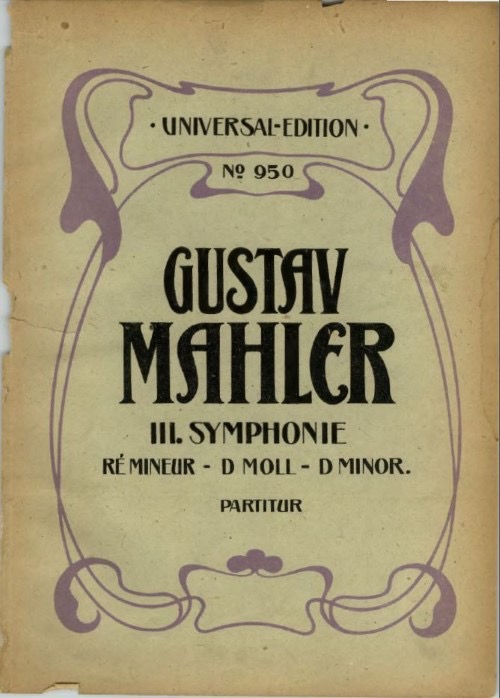
Recurring Music Series: Symphony, Mahler #3
Recurrence brings intentionality:* One discovers more than the first time* One contemplates and deciphers the varied interpretations by conductor and orchestra* The state of the individual listener will change through having eaten garlic or no garlic, through joy or suffering, or based on a peaceful sleep or a difficult and aggressive conversation beforehand, thus changing…
-
The Life You Give: Gustav Mahler *VII 7 1860
Gustav Mahler, born July 7, 1860, in Kaliště, Bohemia, Austrian Empire, is the composer and conductor, noted for his 10 symphonies and various songs with orchestra, which drew together many different strands of Romanticism. Although his music was largely ignored for 50 years after his death, Mahler was later regarded as an important forerunner of…
-
Symphony Number Nine — Mahler (VI 26 1912 premiere)
Listening to the 9th Symphony of Mahler With the Ninth Mahler returns to a purely orchestral Symphony, after having succeeded in integrating chorus and orchestra in his Eighth, and the genres of the song cycle and Symphony and Das Lied von der Erde, Mahler turns his attention to the purely abstract orchestral music of his…

-
The beautiful thing about Beauty
It grows more, more often, and with more consistency than it dies. Celebrate! July celebrations on Clubhouse: 1 July 1804 George Sand — French novelist7 July 1860 Gustav Mahler — Austrian composer6 July 1887 Marc Chagall — French painter 10 July 1895 Carl Orff — German composer 6 July 1907 Frida Kahlo — Mexican painter18…

-
Happy Birthday, Gustav Mahler — 1860
Join us, listening to his symphonies, on Clubhouse, today at 1pm EST. https://www.clubhouse.com/join/birthday-celebration/QVwPQsCz/MOv3gaoE

 Sila Blume