Orchestra
-
Johann Strauss *III 14 1804 — The Life You Give
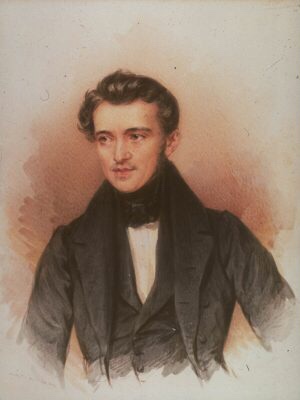
Johann Strauss I, born March 14, 1804, Vienna, is one of the principal composers of Viennese waltzes. Strauss became a viola player in the dance orchestra of Michael Pamer, a composer of light music. Later he conducted the orchestra of Josef Lanner and in 1826 performed at the gardens of the “Zwei Tauben” the Täuberl-walzer,…
-
Samuel Barber *III 9 1910 — The Life You Give
Early years Barber was born in West Chester, Pennsylvania, the son of Marguerite McLeod (née Beatty) and Samuel LeRoy Barber. At a very early age, Barber became profoundly interested in music, and it was apparent that he had great musical talent and ability. At the age of nine he wrote to his mother: Dear Mother:…

-
Maurice Ravel *III 7 1875 — The Life You Give
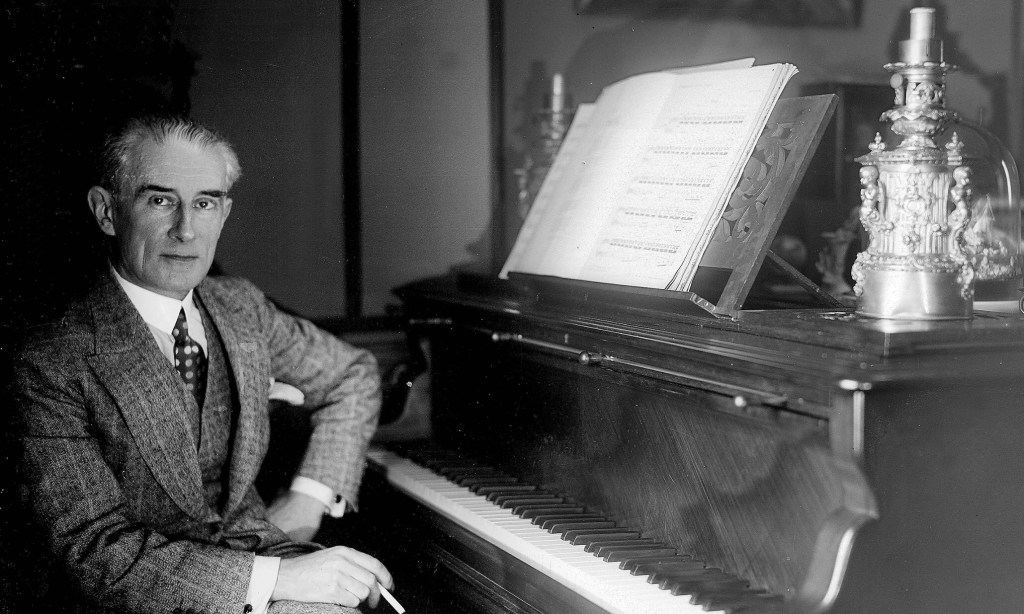
Maurice Ravel, born Joseph-Maurice Ravel, on March 7 1875, Ciboure, France, was the composer of Swiss-Basque descent, noted for his musical craftsmanship and perfection of form and style in such works as Boléro (1928), Pavane pour une infante défunte (1899; Pavane for a Dead Princess), Rapsodie espagnole (1907), the ballet Daphnis et Chloé (first performed…
-
Bedřich Smetana *III 2 1824 — The Life You Give
Bedřich Smetana, born March 2, 1824, in Leitomischl, Bohemia, Austrian Empire [now Litomyšl, Czech Republic], was composer of operas and symphonic poems, and founder of the Czech national school of music. He was the first truly important Bohemian nationalist composer. Smetana studied music under his father, an amateur violinist. He early took up piano under…

-
Alban Berg *II 9 1885 — The Life You Give
Alban Berg, born Alban Maria Johannes Berg, on February 9 1885, in Vienna, Austria, is the composer who wrote atonal and 12-tone compositions that remained true to late 19th-century Romanticism. He composed orchestral music (including Five Orchestral Songs, 1912), chamber music, songs, and two groundbreaking operas, Wozzeck (1925) and Lulu (1937). Apart from a few…

-
Felix Mendelssohn *II 3 1809 — The Life You Give
Felix Mendelssohn, born Jakob Ludwig Felix Mendelssohn-Bartholdy, on February 3 1809, in Hamburg, Germany, is, as composer, pianist, musical conductor, and teacher, one of the most-celebrated figures of the early Romantic period. In his music Mendelssohn largely observed Classical models and practices while initiating key aspects of Romanticism—the artistic movement that exalted feeling and the…

-
Wolfgang Amadeus Mozart *I 27 1756 — The Life You Give
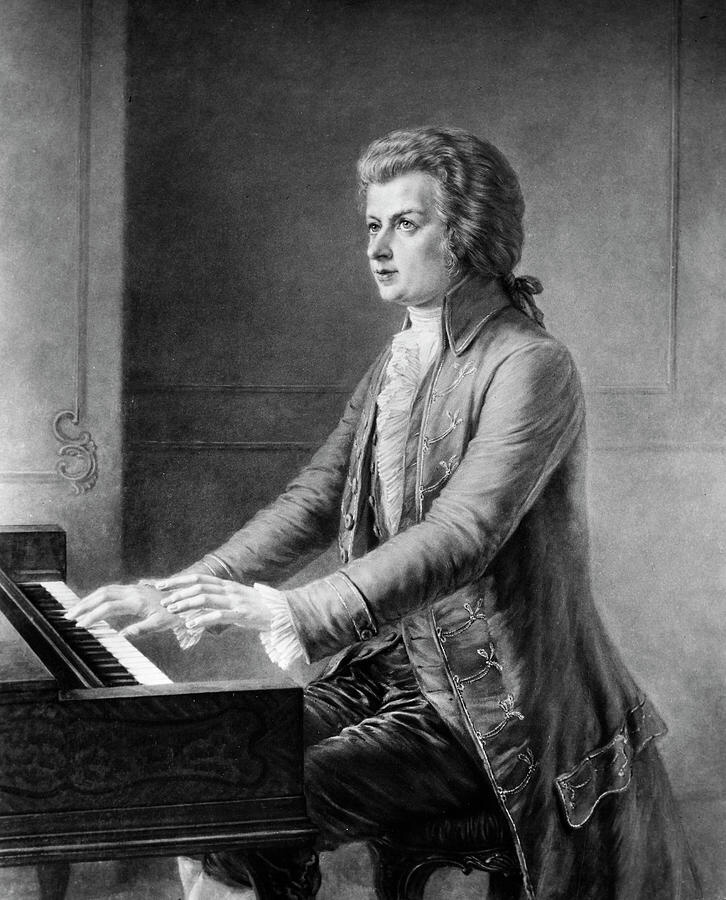
Johann Chrysostom Wolfgang Amadeus Mozart, baptized as Johannes Chrysostomus Wolfgangus Theophilus Mozart, born January 27, 1756, in Salzburg, is the composer widely recognized as one of the greatest composers in the history of Western music. With Haydn and Beethoven he brought to its height the achievement of the Viennese Classical school. Unlike any other composer…
-
Witold Lutosławski *I 25 1913 — The Life You Give
Lutoslawski was the leading progressive figure in Polish music of the second half of the twentieth century. Born in Warsaw, he showed an exceptional musical talent at an early age, with his first compositions dating from 1922. He studied piano, violin, and composition (with Witold Maliszewski, a pupil of Rimsky-Korsakov), graduating from the Warsaw Conservatory…

-
Aleksandr Scriabin *I 6 1871 — The Life You Give
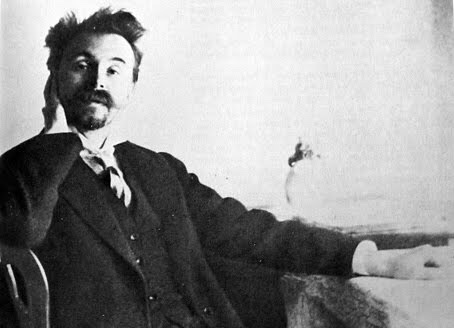
Aleksandr Scriabin, born Aleksandr Nikolayevich Scriabin, on Jan. 6, 1872, in Moscow, Russia, was a composer of piano and orchestral music noted for its unusual harmonies through which the composer sought to explore musical symbolism. Scriabin was trained as a soldier at the Moscow Cadet School from 1882 to 1889 but studied music at the…
-
The Symphony
A symphony is a lengthy form of musical composition for orchestra, normally consisting of several large sections, or movements, at least one of which usually employs sonata form (also called first-movement form). Symphonies in this sense began to be composed during the so-called Classical period in European music history, about 1740–1820. The early part of…
-
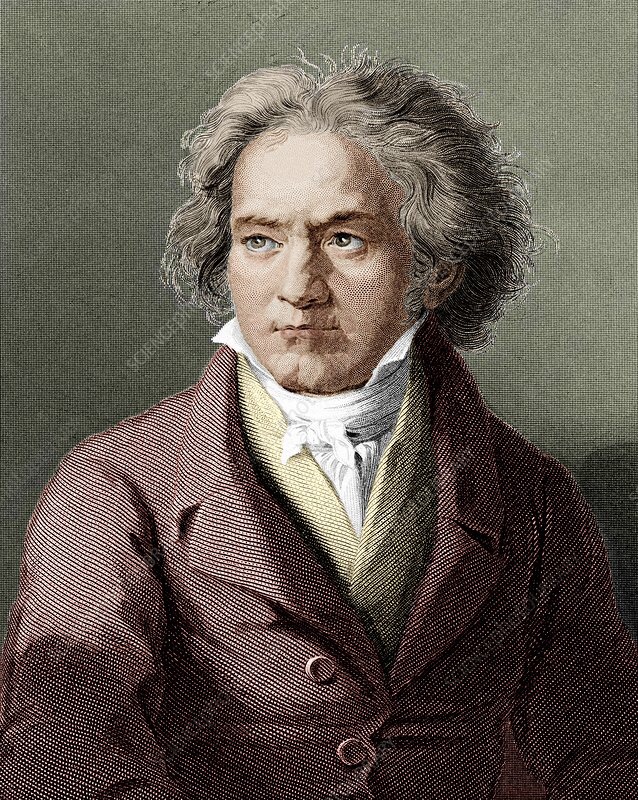
Ludwig van Beethoven *XII 17 1770 — The Life You Give
Ludwig van Beethoven, born on December 17, 1770, in Bonn, Germany, is the composer, and predominant musical figure in the transitional period between the Classical and Romantic eras. Widely regarded as the greatest composer who ever lived, Ludwig van Beethoven dominates a period of musical history as no one else before or since. Rooted in…
-
Recurring Music Series: Symphony, Sibelius #2 in D Major
We proceed with the Recurring Music Series, today in the example of a grand piece of the symphony genre. animal noble presents Recurring Music Series: Symphony, Sibelius #2 December 16 at 1 pm EST on Clubhose Symphony No.2 in D major, Opus 43 Jean Sibelius (*XII 8 1865) Movements:I. Allegretto (D major, 333 bars)II. Tempo…

-
Hector Berlioz *XII 11 1803 — The Life You Give
Hector Berlioz, born Louis-Hector Berlioz on December 11, 1803, in La Côte-Saint-André, France, is the composer, critic, and conductor of the Romantic period, known largely for his Symphonie fantastique (1830), the choral symphony Roméo et Juliette (1839), and the dramatic piece La Damnation de Faust (1846). His last years were marked by fame abroad and…

-
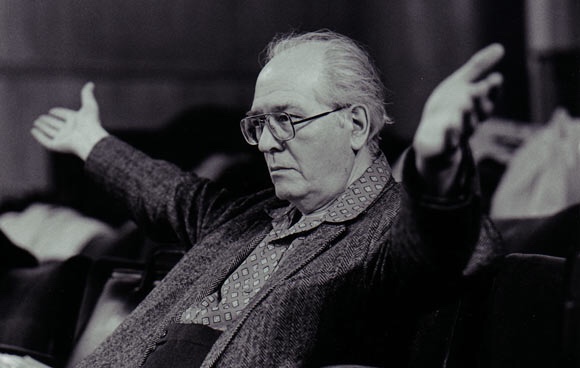
Olivier Messiaen *XII 10 1908 — The Life You Give
Olivier Messiaen, born Olivier-Eugène-Prosper-Charles Messiaen, December 10, 1908, in Avignon, France, is the influential composer, organist, and teacher noted for his use of mystical and religious themes. As a composer he developed a highly personal style noted for its rhythmic complexity, rich tonal colour, and unique harmonic language. Messiaen was the son of Pierre Messiaen,…
-
César Franck *XII 10 1822 — The Life You Give
César Franck, born César Auguste Jean Guillaume Hubert Franck, on December 10, 1822, in Liège, Neth.—died Nov. 8, 1890, Paris, France), Belgian-French Romantic composer and organist who was the chief figure in a movement to give French music an emotional engagement, technical solidity, and seriousness comparable to that of German composers. Franck was born of a…

 Sila Blume