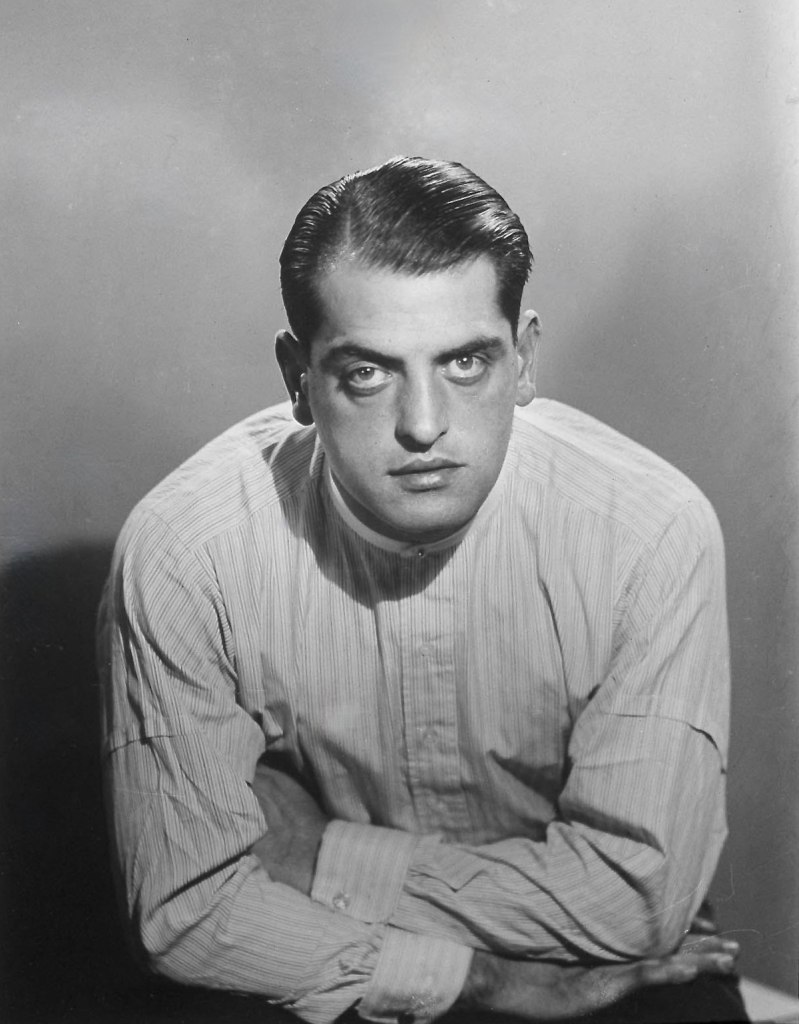
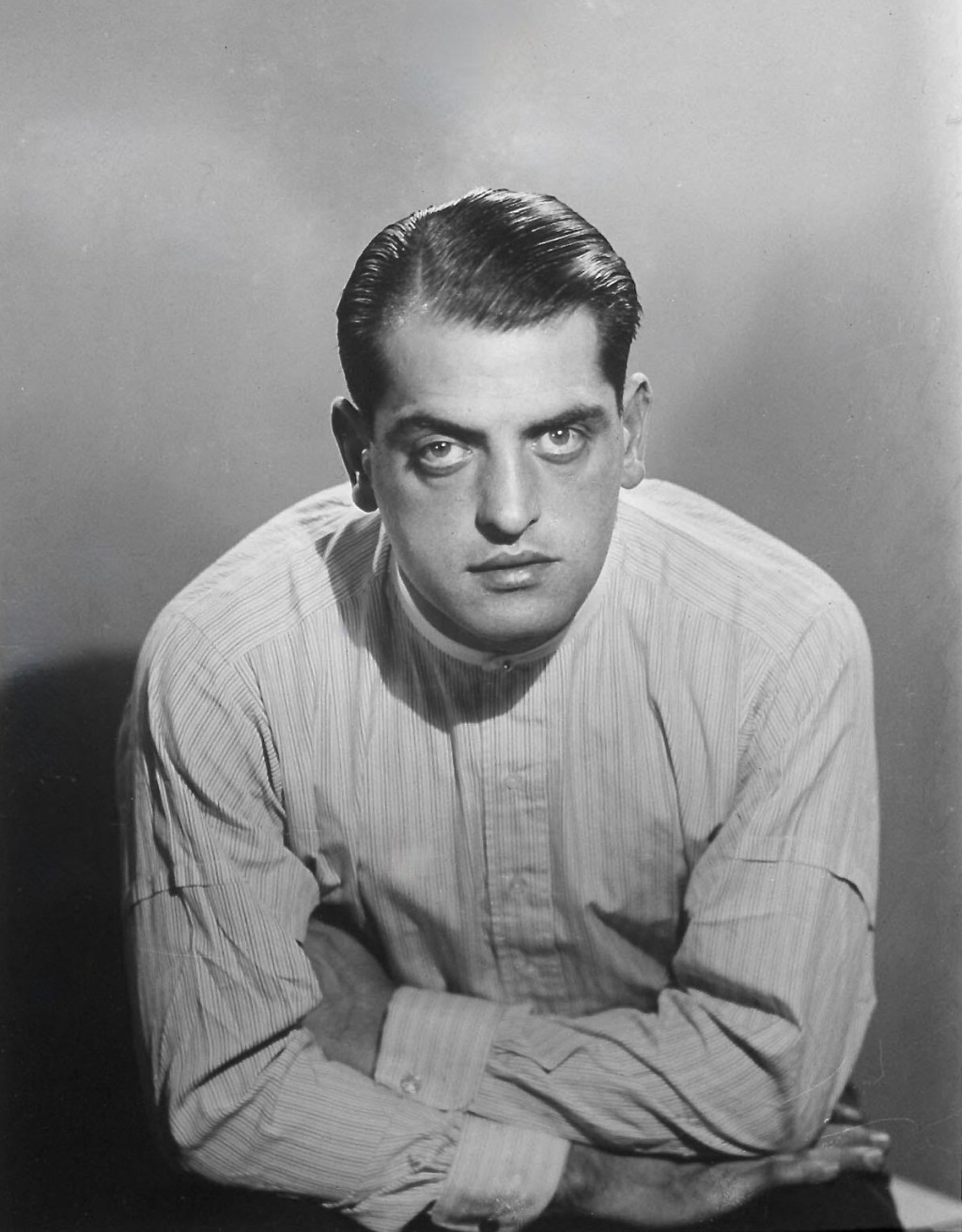
Luis Buñuel, born Luis Buñuel Portolés on February 22, 1900, Calanda, Aragón, Spain, is the filmmaker who was a leading figure in Surrealism, the tenets of which suffused both his life and his work. An unregenerate atheist and communist sympathizer who was preoccupied with themes of gratuitous cruelty, eroticism, and religious mania, he won early fame with avant-garde experiments in France and then pursued an obscure career in Mexican commercial cinema before earning international acclaim with his late films made in Spain and France.
Buñuel was born in Calanda, in northeastern Spain, the eldest of seven children. His father, Leonardo, made a fortune in Havana selling hardware and firearms, and he subsequently returned to Spain, married a much younger woman, and settled down to the life of a country gentleman. “The fact of the matter,” Luis later said, “is that my father did absolutely nothing.” Influenced by his mother, Buñuel studied violin and contemplated a career as a composer. He graduated from the Jesuit school in Zaragoza, Spain, where the family moved shortly after his birth, but he rejected religion and became a lifelong atheist.
Entering the University of Madrid (later Complutense University of Madrid) in 1917, Buñuel took rooms in its Residencia des Estudiantes. A hotbed of liberal thought, the Residencia attracted young men interested in art, music, literature, and politics. Buñuel befriended two rising stars, poet and playwright Federico García Lorca and painter Salvador Dalí. Fascinated with the natural world, particularly insects, Buñuel initially hoped to become an entomologist. Instead, his father insisted that he study engineering, a profession useful for a landowner and, moreover, respectable. Ultimately, however, he studied philosophy.
In 1925 Buñuel moved to Paris in order to pursue a position with the emerging League of Nations. The job fell through, but he remained in France, reviewing movies for Madrid papers while acting as an extra and production assistant on such films as Carmen (1926; directed by Jacques Feyder), the Josephine Baker vehicle La Sirène des tropiques (1927; Siren of the Tropics), and La Chute de la maison Usher (1928; The Fall of the House of Usher), which he also cowrote. Friends made on those films, particularly actor Pierre Batcheff and cinematographer Albert Duverger, later became his collaborators.
Determined to make his mark, Buñuel asked his mother for a sum equal to the dowries allocated to each of his sisters. He invested it in Un Chien andalou (1929; An Andalusian Dog), a short film in Surrealist style. Using the free-association technique pioneered by André Breton and Philippe Soupault, Buñuel and Dalí wrote the film, which Buñuel directed and Duverger photographed; Batcheff played a major role. Dalí arrived from Spain only for the last days of shooting and, according to some reports, was surprised by Buñuel’s efficient management of the production and resented the evidence that he could function without him. Their friendship subsequently cooled.
Breton approved Un Chien andalou and admitted both Buñuel and Dalí to his tight-knit circle of Surrealists. Wealthy dilettantes Charles and Marie-Laure de Noailles funded his second film, L’Age d’or (1930; The Golden Age), an assault on the repression of sex by organized religion. In one of its most-controversial scenes, Christ is seen leaving an orgy orchestrated by the Marquis de Sade. Before its release, MGM put both Buñuel and the film’s star, Lya Lys, under contract, shipping them to Hollywood. In their absence, right-wing protesters wrecked a cinema showing the film, the censor banned it, and the Noailleses fled Paris. Dalí also distanced himself from the film.
Disgusted, Buñuel considered taking a long Pacific Ocean cruise. Instead, inspired by news of a new socialist republic in Spain, he hurried back to Madrid in 1930. As the fascists, the military, and the Roman Catholic Church struggled to stifle the left, an anarchist group funded Las Hurdes (1933; Land Without Bread), his documentary about that remote impoverished region. In Madrid he also produced some low-budget commercial films in an attempt to build a local cinema industry, but the project collapsed as the country descended into the Spanish Civil War. Returning to Paris in 1936, Buñuel acted as a spy and a propagandist for the Republican government in exile until, fearing assassination by fascist agents, he fled with his wife and young son to the United States. Vowing never to return to a fascist Spain, he remained in exile until 1960.
While Buñuel struggled in New York, Dalí flourished, being feted by society and the media. When Buñuel asked him for a loan, Dalí refused, allegedly lecturing him on the virtues of thrift. After briefly working in Hollywood, dubbing feature films into Spanish, Buñuel was rescued by Iris Barry, the film curator at New York’s Museum of Modern Art. She employed him to revoice documentaries for the South American market and edit captured Nazi films into propaganda. But his political past soon became an embarrassment, and he was forced to resign.
In 1946, like many left-wing blacklistees, Buñuel relocated in Mexico, becoming a citizen in 1949. Paradoxically, the move launched his feature career. Producer Oscar Dancigers, a clandestine communist, hired him to direct inexpensive comedies and musicals. Buñuel planned them with such precision that they stayed within even Dancigers’s meagre budgets. After El gran calavera (1949; The Great Madcap), a success for comic Fernando Soler, Buñuel made Los olvidados (1950; The Young and the Damned), a drama of violence among slum youths in Mexico City to which Buñuel added a subversive surrealist subtext, including a dream sequence redolent of incest. Regarded by some Mexicans as an insult, Los olvidados might have been suppressed had the 1951 Cannes film festival not selected it and awarded Buñuel the best director prize, after which the film screened for months in Paris and London.
Despite offers to work in Europe, Buñuel continued to live quietly and frugally with his family in Mexico City. Always delivering his films on time and under budget, he enjoyed a rare freedom to air his communist, atheist, and surrealist principles and to explore his sexual obsessions. His best Mexican films included Ensayo de un crimen (1955; The Criminal Life of Archibaldo de la Cruz), in which a man fetishizes the wax dummy of a woman, and Nazarín (1958), about a priest vainly attempting to live simply, in imitation of Christ.
Buñuel also made subversive film versions of Robinson Crusoe, with Irish actor Dan O’Herlihy, and of Wuthering Heights (original title Abismos de pasión) in 1954. El ángel exterminador (1962; The Exterminating Angel) spun a fable about guests at a dinner party who find themselves powerless to depart and take up residence in the mansion of their hosts. The 42-minute Simón del desierto (1965; Simon of the Desert) attacked Christian dogma, showing all the temptations of the flesh assailing St. Simeon Stylites, who fled to the wilderness and sequestered himself on top of a column.
In 1960 Buñuel returned to Europe for the Cannes screening of The Young One, a racially provocative drama set on an offshore island and starring Hollywood left-wing actor Zachary Scott. Wooed by young Spanish directors and by the Francisco Franco government, he scandalized his supporters by reneging on his pledge never to work in fascist Spain, agreeing to make a feature there.
By choosing to adapt Halma—a novel by the respected author of Nazarín, Benito Pérez Galdós, about a saintly woman trying to establish a community for the poor—Buñuel convinced the authorities of his good intentions. In practice, his version, retitled Viridiana (1961), discarded most of Galdós’s work, substituting the story of the pious Viridiana who visits her wealthy uncle and guardian before entering a convent. When she resists his attempts at seduction, he hangs himself with her childhood skipping rope, its suggestively phallic wooden handles prominently displayed. In the film’s famous banquet scene, the mob of derelicts that Viridiana has subsequently tried to help freezes in a tableau precisely replicating Leonardo da Vinci’s Last Supper while, to the “Hallelujah Chorus” from George Frideric Handel’s Messiah, a crone “photographs” the diners by lifting her skirt to expose herself. The Franco regime rushed to suppress the film, but in a stratagem of surrealist eccentricity, Buñuel’s son had already smuggled the negative into France hidden in a van carrying a team of bullfighters.
After Viridiana won the Palme d’Or at Cannes, Buñuel alternated between Paris and Mexico City. In France he adapted Octave Mirbeau’s Le journal d’une femme de chambre (1964; The Diary of a Chambermaid), exposing the French bourgeoisie as closet fetishists, and he attacked sexual repression in Belle de jour (1967; “Beauty of the Day”), adapting Joseph Kessel’s novel of a middle-class woman who finds guilty pleasure in working afternoons as a prostitute. Catherine Deneuve’s performance in the lead role was widely acclaimed.
His later French films—including Tristana (1970), again starring Deneuve; Le Charme discret de la bourgeoisie (1972; The Discreet Charm of the Bourgeoisie); and Cet obscur objet du désir (1977; That Obscure Object of Desire)—all trade in Buñuel’s first and only real belief system, surrealism. In this world, society rests precariously on a swamp of repression and suppressed violence from which, periodically, dreams erupt, goading superficially civilized people into actes gratuits during which they cast aside the facade of propriety to fornicate and kill. As Buñuel whiled away his afternoons in one of many favourite bars, sipping his signature sweet martini cocktail, the Buñueloni, he found quiet satisfaction in watching society at last catch up with what he had been saying all his life.
Buñuel’s autobiography — My Last Sigh, ghosted by longtime collaborator Jean-Claude Carriere—was published in 1983, the year of his death, but he remained intensely private to the end, committed only to his work. “I hate publicity,” Buñuel said in 1960. “It makes the good things, the human things, disappear. I care only what my friends think. And money? If I made too much, I might stop working.” Of Buñuel’s often contradictory personal philosophy, Orson Welles remarked aptly, “He is a deeply Christian man, and he hates God as only a Christian can.”
Legacy
The most controversial of filmmakers and the most reticent, Buñuel, almost uniquely among directors of his generation, pursued his vision in the face of commercial realities. Indifferent to profit, shunning possessions, he concerned himself solely with the act of creation. A surrealist to the last, his fidelity was to the unconscious and those impulses to which it gives rise. A creator sui generis, he was rivaled only by the Marquis de Sade in his unflinching regard of the seductive evil at the soul’s core.
Source: Britannica
Luis Buñuel, nacido en febrero 22, 1900, fue director de cine, y una de las grandes figuras de la historia del cine. Su padre, Leonardo Manuel Buñuel, fue un indiano fantasioso que regresó de Cuba enriquecido y se instaló en Calanda; solía relatar numerosas aventuras ilusorias a los lugareños y afirmaba con bravuconería que sería para él la mujer más bella del pueblo. La elegida fue una muchacha delicada, que tocaba el piano y que tenía diecisiete tiernos años, llamada María Portolés, para quien mandó construir una suntuosa mansión. No estaba todavía terminada la casa cuando María dio a luz su primer hijo, Luis, precisamente poco antes de que comenzaran las fiestas de Semana Santa del año 1900.
Don Leonardo, convertido en un burgués severo y justo de ideas liberales, se cansó enseguida del pueblo y se trasladó a Zaragoza, donde entró en contacto con los círculos intelectuales de la capital, aunque mantuvo la costumbre de veranear en Calanda con toda la familia, con su mujer, sus siete hijos, las sirvientas y los amigos de la casa.
Entre los primeros recuerdos de Luis Buñuel está la escena, verdaderamente feudal, de grupos de pordioseros que acudían a la puerta de su hogar a mendigar un panecillo y una moneda de diez céntimos. Los que lo conocieron en su infancia cuentan de él numerosas travesuras, como una escapada con otros muchachos que duró más de veinticuatro horas y cuyo itinerario pasaba por los nichos del cementerio y concluía en una sórdida y oscura cueva. Allá estallaron los lamentos y las lágrimas, de modo que para tranquilizar a sus compañeros Luis se ofreció en sacrificio para ser comido. Felizmente ello no fue necesario y pudo regresar sin mayores contratiempos a su casa, donde no obstante seguiría practicando juegos peregrinos, tales como decir solemnes misas ante la arrobada concurrencia de pequeños feligreses.
Contagiado del ambiente familiar, Luis Buñuel confesó haber sido de niño muy religioso y creyente, pero hacia los catorce o quince años cayeron en sus manos libros de Herbert Spencer, Piotr Kropotkin, Friedrich Nietzsche y Charles Darwin, especialmente El origen de las especies, y comenzó a perder la fe. Con el tiempo, el hombre que declaró “soy ateo, gracias a Dios” llegaría a ser el emblema viviente de un arte blasfemo e iconoclasta, se acercaría al ideario anarquista, ingresaría en el grupo parisino de jóvenes revolucionarios que abanderaban la estética del surrealismo y trabajaría al servicio de la República montando documentales durante la guerra civil española.
Buñuel estudió el bachillerato con los jesuitas de Zaragoza y luego su padre lo envió a Madrid para que se hiciera ingeniero agrónomo. Providencialmente fue a parar a la Residencia de Estudiantes, lugar donde confluyeron algunos de los poetas y artistas más relevantes de la época, como Ramón Gómez de la Serna, Federico García Lorca o Salvador Dalí, con los que trabó fecunda amistad.
De este modo descubrió pronto que su auténtica vocación no era la ingeniería, y ni siquiera la entomología, a la que se aficionó extraordinariamente, sino el arte. Bullía en su interior un ansia de novedades, una fiebre de vida que no podía desahogarse en el mezquino ambiente académico; prefería las tertulias a las aulas, y en ellas brillaba tanto su desbordante imaginación como su poderosa envergadura física, derrotando a todos sus compañeros cuando entablaban un pulso sobre las mesas de mármol de los cafés. Además, practicaba con notoria pericia el boxeo, e incluso a punto estuvo de proclamarse campeón amateur de este deporte.
Por último se decidió por la carrera de Filosofía y Letras, que pudo terminar en 1923, el mismo año en que falleció su padre, y dos años después se trasladó a París. En 1926 le impresionó vivamente una película de Fritz Lang, Der müde Tod (Las tres luces), y decidió dedicarse al cine, para lo cual se ofreció como ayudante de Jean Epstein, con quien colaboró en el rodaje de Les aventures de Robert Macaire, Mauprant y La Chute de la Maison Usher, aunque en este último filme no llegó al final.
La razón fue una discrepancia surgida entre los dos cineastas respecto a la auténtica valía de otro gran director francés, Abel Gance, muy admirado por Epstein y escasamente respetado por el joven vanguardista Buñuel. De hecho, éste estaba a punto de ingresar en las filas belicosas del grupo surrealista, que dirigía con mano férrea André Breton y en el que militaban, en un primer momento, Benjamin Péret, Louis Aragon, Paul Éluard, Max Ernst, René Char y Man Ray, entre otros. Todavía no se incluía entre ellos Salvador Dalí, el amigo de Buñuel, que por aquel tiempo se dedicaba a la pintura en su residencia de Cadaqués, y con quien realizará su primer guión cinematográfico: Un perro andaluz.
“En 1927 o 1928 (cuenta Luis Buñuel en sus memorias) yo estaba muy interesado en el cine. En Madrid presenté una sesión de películas de vanguardia francesa. Estaban en el programa Rien que les heures de Cavalcanti, Entracte de René Clair y no recuerdo qué otras películas. Tuvieron un enorme éxito. Al día siguiente me llamó Ortega y Gasset y me dijo: Si yo fuera joven, me dedicaría al cine. Luego, pasando la Navidad con Salvador Dalí en Figueras, le dije que quería hacer una película con él. Teníamos que buscar el argumento. Dalí me dijo: Yo anoche soñé con hormigas que pululaban en mis manos. Y yo: Hombre, pues yo he soñado que le seccionaba el ojo a alguien. Ahí está la película, vamos a hacerla. En seis días escribimos el guión. Estábamos tan identificados que no había discusión. Escribíamos acogiendo las primeras imágenes que nos venían al pensamiento y, en cambio, rechazando todo lo que viniera de la cultura o de la educación. Por ejemplo: la mujer agarra una raqueta para defenderse del hombre que quiere atacarla. Entonces, éste, mira a su alrededor buscando algo para contraatacar y (ahora estoy hablando con Dalí) ¿Qué ve? Un sapo que vuela. ¡Malo! Una botella de coñac. ¡Malo! Pues ve dos cuerdas. Bien, pero qué viene detrás de las cuerdas. El tipo tira de ellas y cae, porque arrastra algo muy pesado. Ah, está bien que se caiga. En las cuerdas vienen dos grandes calabazas secas. ¿Qué más? Dos hermanos maristas. Eso es, dos hermanos maristas. ¿Y después? Un cañón. Malo. Que venga un sillón de lujo. No, un piano de cola. Muy bueno, y encima del piano de cola un burro… no, dos burros podridos. ¡Magnífico! O sea, que hacíamos surgir representaciones irracionales sin ninguna explicación.”
El filme, rodado en París por Luis Buñuel con dinero que le dio su madre, fue un escándalo, pero también un éxito en ciertos círculos que lo aplaudieron como el gran cineasta de vanguardia del momento. Más tarde, tras enfriarse sus relaciones con Dalí a causa de la influencia que sobre éste ejercía su nueva compañera Gala, vendría otra película surrealista, L’age d’or (La edad de oro), donde se incluyen frases tan provocativas como “¡Qué alegría haber asesinado a nuestros hijos!” Y el siguiente filme sería Las Hurdes, tierra sin pan, documental sobre la barbarie y la miseria de la España profunda, producido con el dinero que había ganado a la lotería su amigo Ramón Acín.
Hollywood se interesó inmediatamente por el prometedor y provocador director cinematográfico, pero aunque llegó a viajar a Estados Unidos en calidad de observador, Buñuel no se plegó a las tiránicas reglas de los productores y pronto abandonó La Meca del cine. Tampoco duró mucho su alineación en las huestes surrealistas, ni fue demasiado feliz su colaboración como documentalista al servicio de la República española durante la guerra civil, de la que muchos años después incluso se negaba a hablar.
En 1933 Buñuel se había casado con Jeanne Rucar de Lille, que le dio dos hijos, Jean Louis (1934) y Rafael (1940). En 1944 está trabajando como conservador de películas en el Museo de Arte Moderno de Nueva York, y tres años después se traslada a México, que sería su segunda patria, para rodar un filme con Jorge Negrete, Gran Casino, que constituyó un estrepitoso fracaso.
No obstante, pactó con la productora que realizaría dos películas económicamente rentables para que le dejasen llevar a cabo un proyecto personal. Éste fue Los olvidados (1950), que acaparó premios a la mejor dirección, argumento y guión en los festivales de Cannes y México. Pese a las precarias condiciones en las que se desenvolvía allí su trabajo, siguió coleccionando galardones y asombrando al mundo con Subida al cielo (1951), Las aventuras de Robinson Crusoe (1952), Nazarín (1958) y otras, pero por razones económicas también se vio obligado a dirigir algunas películas de mucha menos monta.
Regresó a España para dirigir Viridiana (1961), con un argumento basado en una novela de Benito Pérez Galdós, igual que su otro film español, Tristana (1970). La etapa final de su carrera es francesa, y en ella analizó a la burguesía presentando una imagen completa de la destrucción, el engaño y la falsa apariencia. La fascinación por todo un amplio repertorio de símbolos se concreta en las tres películas que produjo Serge Silberman (El discreto encanto de la burguesía, 1972 -Oscar de Hollywood-; El fantasma de la libertad, 1974; y Ese oscuro objeto del deseo, 1977).
Aunque en las últimas décadas de su vida pudo trabajar con mayor libertad y mayores medios en Francia, su obra completa se caracterizó precisamente por una formidable coherencia pese a todas las circunstancias adversas. Hasta el último día de su vida fue leal a la fiera y ambiciosa estética de su juventud: “Yo quería cualquier cosa, menos agradar”. Pero también a un escrupuloso sentido moral, esa gran lección que Luis Buñuel quiso legar al mundo, porque, como él mismo decía, “la imaginación humana es libre, el hombre no”.
Fuente: Biografias y Vidas
 Sila Blume
Leave a comment