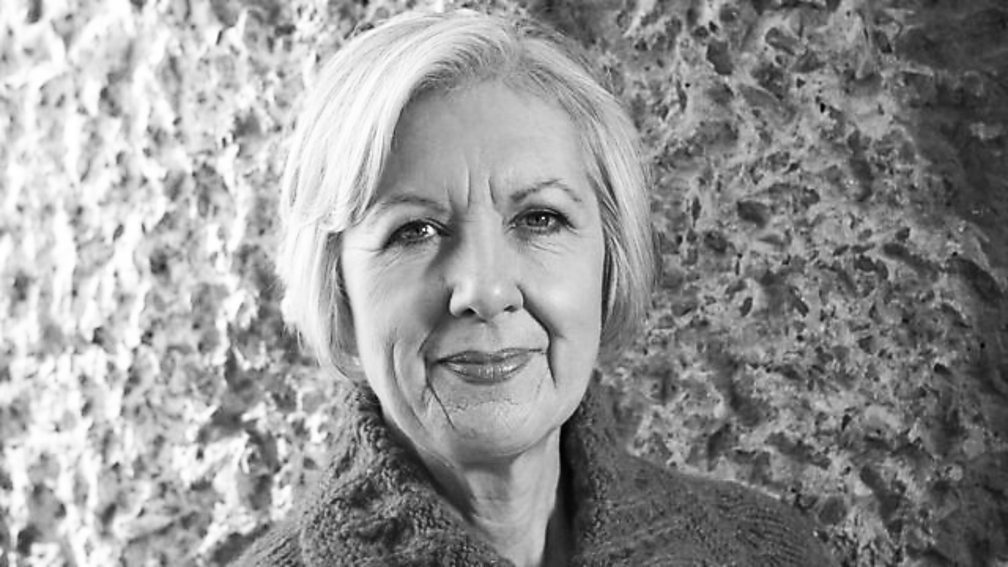
Judith Weir was born May 11 1954 in Cambridge, England, into a Scottish family but grew up near London. She was an oboe player, performing with the National Youth Orchestra of Great Britain, and studied composition with John Tavener during her schooldays. She went on to Cambridge University, where her composition teacher was Robin Holloway; and in 1975 attended summer school at Tanglewood, where she worked with Gunther Schuller. After this she spent several years working in schools and adult education in rural southern England; followed by a period based in Scotland, teaching at Glasgow University and the Royal Conservatoire of Scotland.
musicus, organicus
celebrates the life in music of
Judith Weir
May 11 at 1 pm EST
on Clubhouse
During this time she began to write a series of operas (including King Harald’s Saga, The Black Spider, A Night at the Chinese Opera, The Vanishing Bridegroom and Blond Eckbert) which have subsequently received many performances in the UK, Germany, Austria, the Netherlands, Belgium and the USA. The most recent opera is Miss Fortune, premiered at Bregenz in 2011, and then staged at the Royal Opera House Covent Garden in 2012. In collaboration with director Margaret Williams, Weir has created several opera films, including Scipio’s Dream, Hello Dolly, and Armida.
As resident composer with the City of Birmingham Symphony Orchestra in the 1990s, she wrote several works for orchestra and chorus (including Forest, Storm and We are Shadows) which were premiered by the orchestra’s then Music Director, Simon Rattle. She has been commissioned by the Boston Symphony Orchestra (Music Untangled and Natural History) the Minnesota Orchestra (The Welcome Arrival of Rain) and the London Sinfonietta (Tiger under the Table); and has written concert works for some notable singers, including Jane Manning, Jessye Norman, Dawn Upshaw, Alice Coote, Ailish Tynan and Ruby Hughes. She has composed Concertos for Piano (William Howard) and Oboe (Celia Craig).
In recent years, Judith Weir has considerably expanded her choral catalogue, with regular performance by choirs worldwide of music such as her Christmas carol Illuminare, Jerusalem written for Stephen Cleobury and the choir of King’s College Cambridge. As associate composer with the BBC Singers (2015-19) she completed two oratorios; In the Land of Uz, about the prophet Job; and blue hills beyond blue hills, to Zen-influenced verse by the Scottish poet Alan Spence.
Now based in London, she has had a long association with Spitalfields Music Festival; and has taught as a visiting professor at Princeton, Harvard and Cardiff universities. Honours for her work include the Critics’ Circle, South Bank Show, Ivor Novello and Elise L Stoeger awards, a CBE and The Queen’s Medal for Music.
In July 2014 Judith Weir was appointed to the 395-year old royal post of Master of the Queen’s Music, in succession to Sir Peter Maxwell Davies. Amongst her priorities in this role are the support of school music teachers, of amateur orchestras and choirs, and of rural festivals. In this role she has written music for national and royal occasions, including the Queen’s 90th birthday celebrations and the UK’s official commemoration of the 1918 Armistice. She has also created new music for many community groups and schools, including Burntwood School Wandsworth, Aberdeen Art Gallery, St Mary’s Church Dover and Greenacre School, Barnsley.
Judith Weir’s music has been widely recorded, particularly on the NMC and Delphian labels; and is published by Chester Music and Novello & Co.
Source: Judith Weir
Judith Weir once composed an epic historical opera in three acts, dramatising a cast of thousands, including the Norwegian army, a piece that told the story of King Harald Hadradi's failed invasion of England in 1066. It's a work that you'd have thought requires the armoury of a full-scale opera house to put on, with full-on Cecil B DeMille extravagance. But in fact, King Harald's Saga is written for solo soprano, who sings all the parts – obviously! – and the whole things lasts around 10 minutes. As Weir says, in writing the piece, "a certain amount of compression has been necessary".

That's typical of Weir's personal and artistic understatement. But King Harald's Saga, written when she was in her mid-20s in 1979, embodies the qualities that still define Weir's musical thinking: her concern to tell stories, her ability to distil musical and dramatic ideas to their essences, and her creation of an idiom that's full of expressive subtlety but is never anything less than richly communicative.

Her career is framed by King Harald and Miss Fortune, the large-scale opera (ironically, based on a simple Sardinian folk tale rather than a major historical epic) she recently wrote for the Bregenz festival and which Covent Garden staged earlier this year. And her operas are the centrepieces of her musical life. There's the ebullient and exotic play-within-a-play of A Night at the Chinese Opera, there are dark fairytales, such as the Ludwig Tieck-inspired Blond Eckbert, the Scottish folk stories and supernatural yarns of The Vanishing Bridegroom, and an opera she composed for television in 2005, Armida, about conflict in the Middle East.

All of those pieces manage a trick that Weir's music consistently pulls off, which is to lead you into a world of enchantment with an apparent simplicity of language. As you'll hear in virtually every bar of Blond Eckbert, whose ending is an ecstasy of eerie melody, or the shimmering opening of A Night at the Chinese Opera, Weir has an innate gift for line – for writing tunes, in other words – which makes her a distinctively compelling voice. Hers is addictive, scintillating music. But that very simplicity and immediacy is just what many critics found cause to complain about in Miss Fortune (below). I disagree, for what it's worth: what more do you want from a new opera than that it tells a story clearly, in which the music is consistently imaginative and sometimes, as in the duet at the start of the opera's second half, genuinely ravishing, and which anybody coming to the opera house for the first time would remember as a well-made drama and a luminous, transparent score?

But it's not just her vocal music. Weir has a knack of making the instrumental ensembles she writes for shine and shimmer in a way that's completely her own. Try the opening of her Piano Concerto, for example. It's another pocket-sized compression of a big classical form into just 15 minutes, scored for piano and string ensemble. Weir somehow manages to create music that sounds completely new from the utterly familiar elements of a held chord in the strings and a melody high up in the piano. She is again brilliantly illuminating writing about her own music: "Ever since the modern piano was born, the composition of piano concertos has been on an inflationary spiral, and it is now a musical form associated with the crashingly loud side of music; which is not the kind of music I generally like to write." Her orchestral piece, The Welcome Arrival of Rain, does something similar, a transcendence of the base-metals of scales, string melodies and fanfares into something rich and strange, music that's also inspired by her long-standing love for Indian music, culture, and storytelling.

A couple of Weir pieces to leave you with? I would recommend Natural History, setting four Taoist texts from Chuang-tzu for soprano and orchestra. Weir says that she was attracted to these poems, about a Horse, Singer, Swimmer, and Fish/Bird, because they "are typical of the qualities I most enjoy amongst this literature; concision, clarity, lightness and (hidden) wisdom." She is too modest to say it herself, but those are exactly the qualities that make her music some of the most precious around just now. And the opening of Moon and Star for chorus and orchestra, a setting of Emily Dickinson she wrote for the Proms in 1995, is another example of the spine-tingling power of her music, achieved through lightness, wisdom – and sheer imagination.

Source: The Guardian
 Sila Blume
Leave a comment