Angela Gheorghiu, born Angela Burlacu on September 7, 1965, in Adjud, Romania, is an operatic lyric soprano noted for her powerful voice and commanding stage presence.
Gheorghiu early realized her love of singing, and she was supported by her family in working toward a career in opera. She left home at age 14 to study at the Academy of Music in Bucharest and in 1990 made her debut as Mimi in Giacomo Puccini’s La Bohème at the Cluj-Napoca National Romanian Opera. Her international debut came in 1992 as Zerlina in Mozart’s Don Giovanni at the Royal Opera, Covent Garden, in London. Two years later Gheorghiu, an elegant and compelling artist, was praised as one of the great Violettas when she performed the role in Sir Georg Solti’s production of Giuseppe Verdi’s La traviata at Covent Garden. Her performance (1993) in La Bohème for New York City’s Metropolitan Opera, a production that marked her U.S. debut, was highly praised by critics. She did not work with a teacher, subscribing to a philosophy of self-reliance, and was sometimes compared to the great coloratura soprano Maria Callas.
Gheorghiu met French-born tenor Roberto Alagna in 1992 while appearing with him in La Bohème at Covent Garden. Their relationship deepened during her stint in Solti’s production of La traviata, and they married in 1996 following a very public romance. After their marriage, Gheorghiu and Alagna sought joint bookings with recording studios and opera houses throughout the world. Though Gheorghiu’s penchant for speaking her mind was much remarked upon, she continued to be in demand as a performer.
Gheorghiu recorded numerous albums, including live performances of her roles and solo concerts, such as Puccini’s Il trittico (1999) and La rondine (2003) and Live from La Scala (2007). With compilations such as Arias (1996) and Diva (2004), she showcased her vocal range and versatility by singing selections from across the operatic canon. Her duet albums with Alagna, such as Duets and Arias (1996), also were popular. Gheorghiu filmed several performances, among them her turn as Violetta in Solti’s production of La traviata and her interpretation of Verdi’s Requiem Mass (2001). Films that achieved cinematic release, such as Tosca (2001), in which she took the title role, further widened her audience.
By Amanda E. Fuller / Source: Britannica
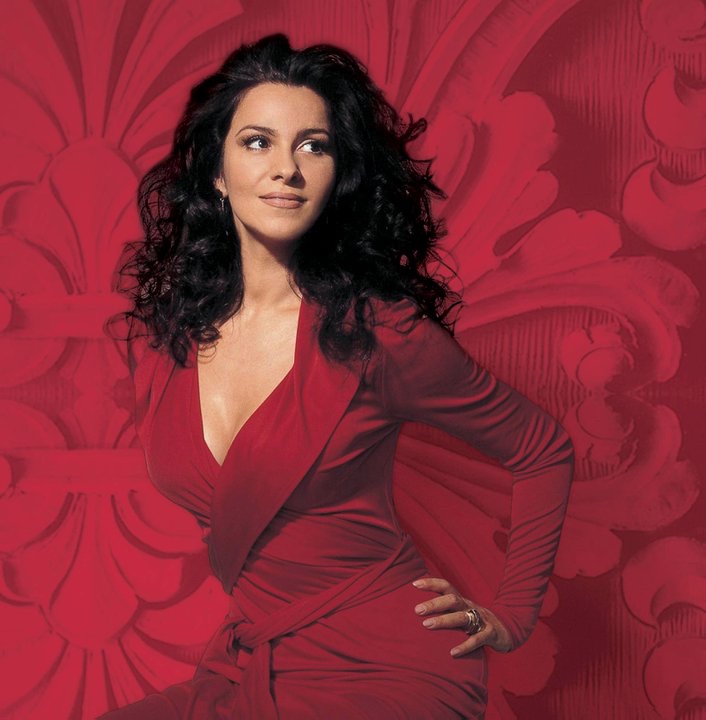
“La Rondine”
La rondine (The Swallow)
Opera in three acts
Music: Giacomo Puccini
Libretto: Giuseppe Adami
Based on a libretto by Alfred Maria Willner and Heinz Reichert
Place: Paris and the French Riviera.
Premiere: 27 March 1917, at the Grand Théâtre de Monte Carlo
Principal Roles
Magda de Civry – soprano
Lisette, her maid – soprano
Ruggero Lastouc – tenor
Prunier, a poet – tenor
Synopsis
ACT I
Paris, the 1920s. The wealthy Rambaldo and his mistress, Magda, are entertaining theatrical and literary friends. Prunier, a poet and the lover of Magda’s maid, Lisette, declares that romantic love is back in fashion. No one except Magda takes him seriously. When Prunier sings a ballad he has written about a girl who rejects the love of a king, Magda sits at the piano and finishes the song, making up a second verse that tells how the girl falls in love with a student (“Chi il bel sogno di Doretta”). She thinks about her own flirtations and recalls an encounter with a young man at Bullier’s restaurant. Rambaldo says he knows what love means and gives Magda a pearl necklace, which she accepts without changing her opinion that love has nothing to do wealth. Prunier offers to read Magda’s palm and predicts that she will go south in pursuit of romance and happiness, just like “la rondine,” the swallow. Rambaldo introduces a visitor, Ruggero, the son of a childhood friend, who is new to Paris and wants to know where to spend the evening. They decide on Bullier’s, and Ruggero leaves to go there. Lisette, flirting with Prunier, tells him that it is her night off and the two follow Ruggero. As the guests depart, Magda decides to remain at home, then changes her mind. She dresses as a shop girl and leaves, confident that no one will recognize her, and ready for an adventure at the restaurant.
ACT II
Bullier’s restaurant is alive with a crowd of artists, students, and young women. Ruggero sits alone at a table. When Magda enters, several young men approach her, but she says she already has a date and joins Ruggero. He doesn’t recognize her. She introduces herself as Paulette. When she teases him about his probable love affairs, he replies that should he ever love a woman, it would be forever. While they talk and dance, they both realize that they have fallen in love with each other. Prunier and Lisette arrive. She is startled by the sight of Magda, but Prunier, understanding the situation, convinces her that it is someone else with a chance resemblance. Suddenly Rambaldo appears, and Prunier asks Lisette to keep Ruggero out of sight. Rambaldo demands an explanation for her escapade from Magda. She replies that she has found true love and is going to leave him. Rambaldo bows ironically, expressing hope that she will not regret it. Ruggero returns and Magda leaves with him to start a new life.
ACT III
Magda and Ruggero have been living in a villa on the Riviera, but their money is running out. Ruggero says he has written to his mother for her consent to their marriage and paints an idyllic picture of his family’s home in the country. Madga is dismayed that her lover doesn’t know anything of her past. After he has left, Prunier and Lisette arrive, quarreling: he had tried to make her a singer but her debut was a disaster. Magda tells Lisette she would be glad to take her into service once more. Prunier, who can’t imagine Magda continuing her fantasy life, delivers a message from Rambaldo: he is ready to welcome her back on any terms. Prunier leaves as Ruggero returns with a letter from his mother, who is delighted that her son has found a good and virtuous bride. Heartbroken, Magda confesses that she can be his mistress but never his wife. He insists he loves her anyway, but she says she will not ruin his future. Leaving the devastated Ruggero behind, she turns away to go back to her old life.
Source: Metropolitan Opera

 Sila Blume
Leave a comment