Freddie Mercury, born Farrokh Bulsara on September 5, 1946, in Stone Town, Zanzibar [now in Tanzania], is the rock singer and songwriter whose flamboyant showmanship and powerfully agile vocals, most famously for the band Queen, made him one of rock’s most dynamic front men.
Bulsara was born to Parsi parents who had emigrated from India to Zanzibar, where his father worked as a clerk for the British government. As a child, Bulsara was sent to a boarding school in Panchgani, Maharashtra state, India. Artistically inclined from an early age, he formed a band there in which he played the piano. When Zanzibar became part of the independent country of Tanzania in 1964, Bulsara moved with his family to Feltham, England. He later studied graphic art and design at Ealing Technical College and School of Art (now part of the University of West London), graduating in 1969.
Influenced by the hard-edged blues-based style of rock acts such as Cream and Jimi Hendrix, Bulsara began singing with bands in London. He also became friends with guitarist Brian May and drummer Roger Taylor of the band Smile, and in 1970, when Smile’s lead singer quit, Bulsara replaced him. He soon changed the group’s name to Queen and his own to Freddie Mercury. Bassist John Deacon joined the following year. Incorporating elements of both heavy metal and glam rock, the band debuted on record with Queen (1973), which was followed by Queen II (1974).
Despite an impressive blend of majestic vocal harmonies and layered virtuosic guitar work, Queen initially failed to attract much notice beyond the United Kingdom. The album Sheer Heart Attack (1974), however, shot up the international charts, and A Night at the Opera (1975) sold even better. The band’s ambitious approach to both songwriting and studio production was epitomized by the latter album’s mock-operatic single “Bohemian Rhapsody,” one of a number of Queen compositions written principally by Mercury. The song spent nine weeks atop the British singles chart, and its accompanying promotional film helped the music industry recognize its future in video. Spectacular success followed in 1977 with “We Are the Champions” and “We Will Rock You”—which became ubiquitous anthems at sporting events in Britain and the United States.
By the early 1980s Queen had become an international phenomenon, drawing particular attention for its elaborately staged performances in enormous venues. Strutting the stage in outrageous costumes, Mercury effortlessly commanded audiences in the tens of thousands. Although Queen’s commercial fortunes had begun to wane by mid-decade, the band arguably reached its apotheosis as a live act with a stellar performance at the charity concert Live Aid in 1985. That same year Mercury released the solo record Mr. Bad Guy, which took musical inspiration from disco. Mercury later appeared on the sound track of Dave Clark’s science-fiction musical Time (1986) and teamed with Spanish soprano Montserrat Caballé for the semi-operatic album Barcelona (1988).
In 1991 Mercury announced that he had been diagnosed with AIDS. He died a day later from complications related to the disease. Until shortly before his death, Mercury had continued to record with Queen, and he was posthumously featured on the band’s final album, Made in Heaven (1995). His time with Queen was dramatized in the blockbuster film Bohemian Rhapsody (2018). Although Rami Malek won an Academy Award for his performance as Mercury in the movie, Bohemian Rhapsody was criticized for its sanitized presentation of Mercury’s complicated life, particularly his sexual fluidity.
Source: Britannica
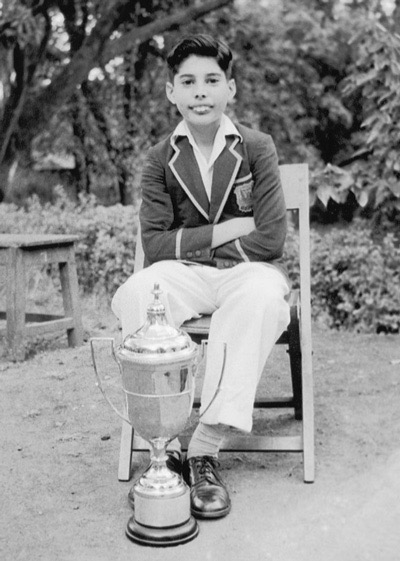
The son of Bomi and Jer Bulsara, Freddie spent the bulk of his childhood in India where he attended St. Peter’s boarding school. He began taking piano lessons at the age of seven. No one could foresee where a love of music would take him.

The Bulsara family moved to Middlesex in 1964 and from there Freddie joined up with a blues band called Wreckage while studying graphic design courses at Ealing College of Art. While singing for Wreckage, a fellow student introduced Freddie to Roger Taylor and Brian May, founder members of a band called Smile. Smile metamorphosed into Queen when Freddie joined Roger and Brian as the lead vocalist. The final member of the band, which was to stay together for the next 20 years, was bassist John Deacon, who joined the band on 1st of March 1971.

While most publicly recognised as the front man to one of the most progressive rock bands of the 70’s, Freddie defied the stereotype. A taste for venturing into new territories – a trait that was to have a marked influence on the direction Queen would take – took Freddie to explore his interests in a wide spectrum of the arts, particularly in the areas of ballet, opera and theatre, even taking a participating role: in October1977 the sell-out audience of a charity gala at the London Coliseum organised by Royal Ballet Principal dance Wayne Eagling received the surprise of an unannounced appearance by a silver-sequinned leotard-clad Freddie performing an intricate routine choreographed for him by Eagling. In 1987 he made a one-night appearance in Dave Clarke’s Time at the Dominion Theatre, although legend has it Freddie occasionally turned up at the theatre to support friend Clarke’s musical, one night selling ice-creams in the stalls! Freddie would have loved the fact that The Dominion now plays host to the band’s phenomenally successful musical We Will Rock You which has now held the Dominion stage nearly seven years longer than Time’s two year run.

Source: Freddie Mercury

 Sila Blume
Leave a comment