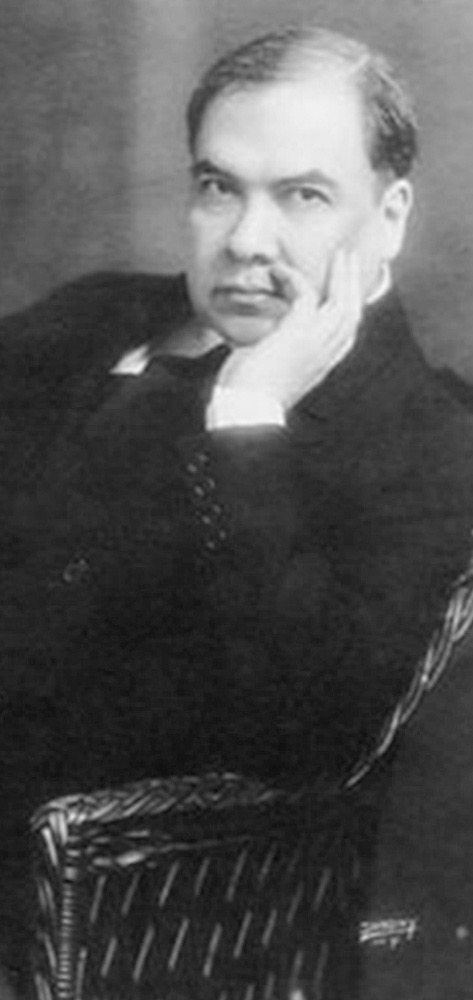
Rubén Darío, born Félix Rubén García Sarmiento, in Metapa, Nicaragua, on January 18 1867, is the influential poet, journalist, diplomat, and leader of the Spanish American literary movement known as Modernismo, which flourished at the end of the 19th century. He revivified and modernized poetry in Spanish on both sides of the Atlantic through his experiments with rhythm, metre, and imagery. Darío developed a highly original poetic style that founded a tradition.
After his return to Central America in 1889 and two brief marriages (the first ended by his wife’s death and the other by separation), he left to take up an appointment in 1893 as Colombian consul in Buenos Aires, where he found the cosmopolitan atmosphere stimulating. Young writers there hailed him as their leader, and the modernist movement organized around him. Darío’s next significant work, Prosas profanas y otros poemas (1896; “Profane Hymns and Other Poems”), a collection of verse, continued the innovative stylistic trends of Azul but treated its exotic scenes and personages in a manner more symbolic than objective, for it was influenced by the contemporary French Symbolist poets.
Darío went to Europe in 1898 as a correspondent for the Buenos Aires newspaper La Nación. Based in Paris and Majorca, he traveled extensively on the European continent on journalistic and diplomatic missions. By this time, world events and his own advancing age had brought about a profound change in his outlook on life. He became vitally concerned with the world outside the realm of art: the possible threat of North American imperialism after the defeat of Spain in 1898, the solidarity of Spanish-speaking peoples, the future of Spanish America after the collapse of Spain’s empire in the New World, and the age-old problems of human existence. The collection that is generally considered to be his masterpiece, Cantos de vida y esperanza (1905; “Songs of Life and Hope”), reflects these concerns and is the culmination of his technical experimentation and his artistic resourcefulness.
On the outbreak of World War I in 1914, Darío left Europe, physically ill and on the brink of poverty. In an attempt to alleviate his financial difficulties, he began a lecture tour of North America, but he developed pneumonia in New York and died shortly after his return to his homeland.
Among the many editions of Darío’s work in Spanish is Obras completas, 2 vol. (1971), edited by A.M. Plancarte. Selected Poems, translated by Lysander Kemp (1965), contains an introduction by Octavio Paz and a tribute—originally given before the Buenos Aires Pen Club in 1933—by Federico García Lorca and Pablo Neruda.
In addition to the three major collections on which his greatest fame rests, Darío wrote approximately 100 short stories and tales, several volumes of poetry and penetrating literary criticism, and the journalistic articles that appeared in La Nación and elsewhere.
From the standpoint of artistic resourcefulness and technical perfection, Darío is considered by many to be one of the greatest poets who ever wrote in Spanish. Throughout his career he boldly experimented with many forms of verse, and he probably introduced more metrical innovations than any other Spanish-language poet. Darío’s poetry is notable for its remarkable musicality, grace, and sonority, and he had a masterly command of rhyme and metrical structure. His earlier anecdotal and descriptive poems treat faraway places, mythology, and other exotic subjects with a rich lyricism, while the later poems in Cantos de vida contain a pronounced philosophical note and exhibit a poignant and powerful sense of the tragic side of life.
Source: Britannica
Rubén Darío *I 18 1867 — The Life You Give
One response to “Rubén Darío *I 18 1867 — The Life You Give”
-
Wonderful ♥️
LikeLike

 Sila Blume
Leave a comment