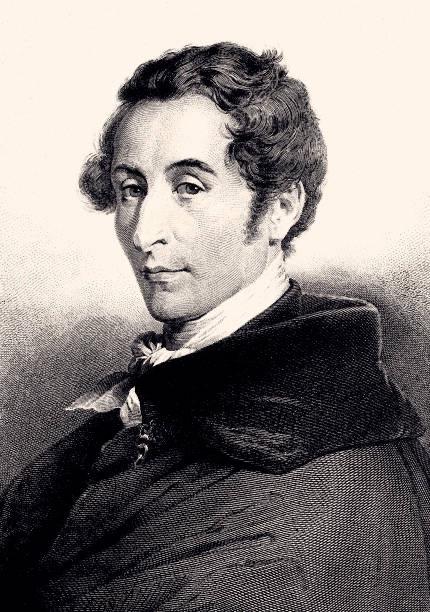
Carl Maria von Weber, born Nov. 18, 1786, in Eutin, Holstein, Germany, is the composer and opera director during the transition from Classical to Romantic music, noted especially for his operas Der Freischütz (1821; The Freeshooter, or, more colloquially, The Magic Marksman), Euryanthe (1823), and Oberon (1826). Der Freischütz, the most immediately and widely popular German opera that had been written to date, established German Romantic opera.
Opera, Blood, and Tears
celebrates the life in music of
Carl Maria von Weber
November 18 at 5 pm EST
on Clubhouse
Weber was born into a musical and theatrical family. His father, Franz Anton, who seems to have wished upon the family the baronial von to which it had in fact no title, was a musician and soldier of fortune who had formed a small traveling theatre company. His mother, Genovefa, was a singer; his uncles, aunts, and brothers were to some degree involved in music and the stage. Carl Maria was a sickly child, having been born with a diseased hip that caused him to limp throughout his life. When he began to show signs of musical talent, his ambitious father set him to work under various teachers in towns visited by the family troupe in the hope that he might prove a Mozartean prodigy. Among these instructors was Michael Haydn, the younger brother of the composer Joseph Haydn. Under Haydn, Weber wrote and published his Opus 1, Sechs Fughetten (1798).
The troupe paused briefly in Munich, where Weber learned the art of lithography under its inventor, Aloys Senefelder. Moving on to Freiberg, the Webers planned to set up a lithographic works in order to propagate the young composer’s music. The scheme fell through; but meanwhile Weber had composed his first opera, Das Waldmädchen (“The Forest Maiden”), which partially survives. Staged at Freiberg in 1800, it was a failure. On a return visit to Salzburg, Weber completed his first wholly surviving opera, Peter Schmoll und seine Nachbarn, which also failed when it was produced in Augsburg in 1803. Weber resumed his studies under the influential Abbé Vogler, through whom he was appointed musical director at Breslau (now Wrocław, Pol.) in 1804. After many difficulties, occasioned by the inexperience of a young director in putting through reforms, and a near-fatal accident in which he permanently impaired his voice when he swallowed some engraving acid, Weber was forced to resign. He was rescued by an appointment as director of music to Duke Eugen of Württemberg, for whose private orchestra he wrote two symphonies. They are attractive, inventive works, but the symphony, with its dependence on established forms, was not the natural medium of a composer who sought to bring Romantic music to a freer form derived from literary, poetic, and pictorial ideas.
Weber was next a secretary in the court of King Frederick I of Württemberg. Here he lived so carelessly and ran up so many debts that, after a brief imprisonment, he was banished. The principal fruits of these years (1807–10) were his Romantic opera Silvana (1810), songs, and piano pieces. Weber and his father fled to Mannheim, where he was, in his own words, “born for the second time.” He made friends with an influential circle of artists, from whom he stood out as a talented pianist and guitarist; he was also remarkable for his theories on the Romantic movement. Moving on to Darmstadt, he met Vogler again, as well as the German opera composer Giacomo Meyerbeer. From this period came principally the Grand Concerto No. 1 in C Major, Opus 11, for piano, and the delightful one-act opera Abu Hassan (1811).
Disappointed in not winning a post in Darmstadt, Weber traveled on to Munich, where his friendship with the clarinet virtuoso Heinrich Bärmann led to the writing of the Concertino, Opus 26, and two brilliant, inventive clarinet concerti. In all, he was to write six clarinet works for Bärmann, with whom he also toured. The clarinet remained, with the horn, one of the favourite instruments of a composer whose ear for new sounds and new combinations of instruments was to make him one of the greatest orchestrators in the history of music. Weber was also one of music’s great piano virtuosos; his own music reflects something of the brilliance and melancholy and exhibitionist charm described by his contemporaries when he performed it. From 1809 to 1818 Weber also wrote a considerable number of reviews, poems, and uncompromising, stringent music criticisms. All his work, music, and critical writings furthered the ideals of Romanticism as an art in which feeling took precedence over form and heart over head.
Appointed conductor of the opera at Prague in 1813, after a period in Berlin during which he caught the patriotic fervour of the day in some stirring choruses and songs, Weber was at last able to put his theories into full practice. His choice of works showed his care for Romantic ideals, and his choice of artists showed his concern for a balanced ensemble, rather than a group of virtuosos. Furthermore, by publishing introductory articles to his performances, he saw to it that his audiences were carefully prepared. Obstacles again appeared: a stormy love affair left him disconsolate, and opposition to his reforms forced him to resign in 1816. His reputation by now, however, was such that he was able to secure an appointment as director of the German opera at Dresden, beginning in 1817. The same year he married one of his former singers, Caroline Brandt.
Dresden was a city more backward than most in Germany, and it had a flourishing rival Italian opera. As the prophet of a German national opera, Weber was faced with even greater difficulties. Happily married, he applied himself energetically to his work, assuming full control over all aspects of the operatic production. No detail escaped him: he supervised repertory, recruitment, casting, scenery, lighting, and production, as well as the orchestra and the singers, taking care to see that every performer fully understood the words and plot of each opera. These tasks left him little time for writing operas himself, however, especially in view of the inexorable advance of his tuberculosis. He nevertheless produced several works during this period, including the last of his four piano sonatas, many songs and shorter piano solos, such as the famous Invitation to the Dance (1819), and the Konzertstück, Opus 79 (1821), for piano and orchestra.
It was also in Dresden that Weber began to work on Der Freischütz, which was an immediate success when it was performed in Berlin in 1821. The story, deriving from folklore, concerns a man who has sold his soul to the Devil for some magic bullets that will enable him to win a marksmanship contest and with it the hand of the lady he loves. The opera presented, for the first time, things familiar to every German: the simple village life, with its rough humour and sentimental affections, and the surrounding forest, with its smiling appearance concealing supernatural horror. Above all, the characters, from the cheerful huntsmen and village girls to the simple, valiant hero and the prince who rules over them, were all—with the tuneful, sensational music—a mirror in which every German could find his reflection. In Der Freischütz Weber not only helped liberate German opera from French and Italian influences, but, in his novel orchestrations and in his choice of a subject matter containing strong supernatural elements, he laid the foundations of one of the principal forms of 19th-century opera. Der Freischütz made Weber a national hero.
His next opera, Euryanthe was a more ambitious work and a larger achievement, anticipating Wagner as his piano music does Chopin and Liszt. It nevertheless foundered on its clumsy, though not intolerable, libretto. When Covent Garden in London commissioned a new opera, Weber took on the task of learning English and working with a librettist, James Robinson Planché, by correspondence. His motive was to earn enough money to support his family after his death, which he knew to be not far off. In form, Oberon was little to his taste, having too many spoken scenes and elaborate stage devices for a composer who had always worked for the unification of the theatrical arts in opera. But into it he poured some of his most exquisite music, and he traveled to London for the premiere in 1826. Barely able to walk, he was sustained by the kindness of his host, Sir George Smart, and by the longing to get home again to his family. Oberon was a success and Weber was feted, but his health was declining fast. Shortly before he was due to start the journey back to Germany, he was found dead in his room.
Source: Britannica
Der Freischütz
Roles:
Ottokar, a sovereign prince, baritone
Kuno, a hereditary forester, bass
Agathe, his daughter, soprano
Ännchen, a young relative, soprano
Caspar, first assistant forester, bass
Max, second assistant forester, tenor
Samiel, the ‘Black Huntsman’, spoken
Hermit, bass
Kilian, a wealthy peasant, baritone
Four bridesmaids, soprano
Hunters, peasants, spirits, attendants
ACT I
The young gamekeeper Max loves Agathe and is to become the successor to Kuno, the head ranger and Agathe’s father. But a test of skill in marksmanship is required, the trial to be held the following day.
At a target shooting, Max loses to the young peasant Kilian, who is proclaimed “King of marksmen.” (“Victoria! der meister soll leben” / “Schau der Herr…”)
Because Max has had ill luck for several days he easily falls under the influence of Kaspar, who persuades Max to cast seven magic bullets to be used in the contest. Kaspar, whose soul on the morrow is to be forfeited to the devil, hopes to obtain three more years of grace by substituting Max in his place. (Trio: “O diese Sonne”.)
Left alone, Max sinks into deep melancholy at the thought of losing Agathe through failure at the shooting contest. (Aria: “Durch die Wälder”.) Kaspar with weird incantations tries to imbue him with courage. (Song: “Hier im ird’schen Jammerthal”.)
He hands Max his gun loaded with a magic bullet, and to his own astonishment Max kills an eagle soaring at a great height. He resolves to go with Kaspar at midnight to the terrible Wolf’s Glen to cast the magic bullets, which will kill anything the shooter wants, in order to win the prize. Kaspar, left alone, triumphs. (Aria: “Schweig! damit dich Niemand warrant”).
ACT II
Scene 1: Agathe’s chamber
Agathe is filled with sad forebodings. She sings of her meeting with a hermit in the forest, who told her that in some danger which menaced her, she would be protected by her bridal wreath. At the moment when Max shoots the magic bullet, the picture of Agathe’s ancestor hanging against the wall falls to the floor, slightly wounding her. Agathe’s cousin and companion Ännchen replaces it. (Duet: “Schelm, halt fest!”). Agathe is still more disturbed, but Ännchen endeavours to cheer her with jests. (Arietta: “Kommt ein schlanker Bursch gegangen”).
Agathe left alone awaits Max with the news of his success, which she decides to interpret as a favourable omen. (Recitative and aria: “Wie nahte mir der Schlummer … Leise, leise).
Max arrives; he acknowledges that he has not been the victor, but explains that he has killed a deer, which he will bring this evening from the Wolf’s Glen. Notwithstanding the prayers of Agathe and Ännchen, Max departs. (Trio: “Wie? Was? Entsetzen!”).
Scene 2: The Wolf’s Glen at night
Kaspar calls upon Zamiel, the black ranger, for assistance, and prepares the casting of the magic bullets. Max arrives and is warned by the spirit of his mother to abandon the project. Zamiel conjures up the shape of Agathe, representing her as drowning herself in despair at Max’s ill success, whereupon he plunges into the glen and with demoniacal noise the casting of the bullets is begun.
ACT III
Scene 1: Agathe’s chamber
Agathe is praying. (Aria: “Und ob die Wolke sie verhülle”). Her doubts have returned, owing to a dream of ill omen, but Ännchen again cheers her with laughter and song. (Romance and aria, subsequently added by Weber: ” Einst träumte meiner sel’gen Base”). The bridesmaids arrive with the bridal wreath. (Song: “Wir winden dir den Jungfern-Kranz”). When Ännchen opens the box, however, she finds within a funeral wreath, which still further increases Agathe’s misgivings. She is somewhat comforted by the memory of the hermit’s promise that she shall be protected by her bridal wreath.
Scene 2: The meeting of the marksmen
Having split the seven bullets between them, Max has used four and Kaspar has used three. Max demands Kaspar give him his last bullet to use in the final shooting contest, but Kaspar refuses. As Max leaves, Kaspar shoots a fox, thus making Max’s bullet the seventh and controlled by the Evil One.
Scene 3: The prize shooting
Duke Ottokar awaits Max at his tent. (Chorus of foresters: “Was gleicht wohl auf Erden”). Max is now to shoot a dove. As he takes aim, Zamiel, the black huntsman, appears to guide the bullet, and causes Max to fire at Agathe, who is apparently wounded. (Finale: “Schaut, o schaut”). Agathe falls, but her bridal wreath has deflected the bullet, which struck Kaspar. Agathe revives from her faint. Kaspar, seeing a holy hermit by her side, realizes that he has failed. Zamiel grasps him instead of Max, whereupon Kaspar expires with a curse upon his lips. Duke Ottokar orders the corpse to be thrown into the Wolf’s Glen, then demands and receives an explanation from Max. In spite of pleas from Kuno, Agathe, peasants, and huntsman, the infuriated duke pronounces the sentence of banishment. Before this can be carried out, however, the hermit enters into their midst. The duke acknowledges the holy man, and asks for his counsel. The hermit explains that the combined effects of love for Agathe, and fear of losing her should he fail the shooting trial are what caused Max to stray from a life that was formerly without fault. The hermit goes on to condemn the trial shot, suggests a probationary year as penalty, and asks who among the assembled has looked into their own heart and would be willing to cast the first stone. If Max lives a faultless life, he will gain forgiveness and be permitted to marry Agathe. The Duke commends the hermit for his wisdom saying a higher power speaks through him. The duke ends his pronouncement by saying he, himself, will place the hand of Agathe in that of Max when the probation is over. The opera ends with the ensemble singing prayers of thanks.
Source: Opera Guide
 Sila Blume
Leave a comment